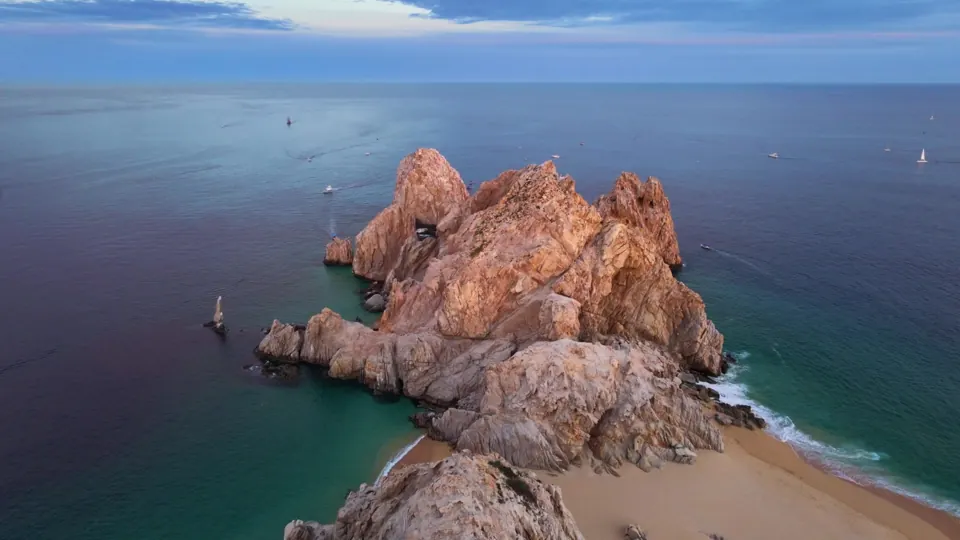
Whale season in Cabo San Lucas

Experiences · November to April

Whale seasonPrivate whale watching in Cabo San Lucas

Humpback whales come to the tip of Baja every winter to breed and calve. SEMARNAT sets the official season every year; for 2025 to 2026 it ran December 15 to April 30.

  • Recommended3 hours
  • Best monthsJan and Feb
  • LeaveMorning
  • From$879 per boat

The whales travel along the coast and through the mouth of the bay, often within sight of Land's End. January and February are the peak months, when mothers and calves are most common. A private charter lets you stay when a whale shows up instead of following a tour schedule.

Sightings are wildlife, never guaranteed, but the season is reliable. Captains follow the Mexican whale-watching rules: they keep their distance, slow down and never chase. Mornings are usually calmer for spotting blows on the water.

How the day goes

A private whale watching charter, stop by stop.

A typical plan. Your captain adapts it to the sea and to what your group wants.

  1. Board

    Morning departures usually have the calmest water for spotting.

  2. Out past Land's End

    The captain heads for open water at the mouth of the bay.

  3. Watch for blows

    Everyone scans for spouts; humpbacks often breach or slap their fins.

  4. The Arch on the way back

    Sea lions and Land's End before heading in.

  5. Back at the dock

    Longer charters leave more time to search.

PACIFIC OCEANSEA OF CORTEZBahía San LucasCABO SAN LUCASTOURIST CORRIDORLAND'S END 1Marina Cabo San Lucas Cabo Escape terminal Médano Beach Pelican Rock Lover's Beach 4Divorce Beach 2The Arch 3Sea lion colony 5Cabo Falso lighthouse Santa María Bay Chileno Bay

2 h · Pacific sunset Around Land's End to the Pacific side, facing the sun as it drops toward Cabo Falso. 12 miles (19 km) round trip

Stops, with distance from the marina

MarinaLandmarkBeachSnorkelWildlifeWhale season area

Typical routes. Your captain adapts them to the sea that day. Coastline © OpenStreetMap contributors (ODbL).

When it's best

Cabo whale watching season, month by month.

  1. JanBest
  2. FebBest
  3. MarGood
  4. AprGood
  5. MayOff season
  6. JunOff season
  7. JulOff season
  8. AugOff season
  9. SepOff season
  10. OctOff season
  11. NovOff season
  12. DecGood

Official season set every year by SEMARNAT: December 15 to April 30 for 2025 to 2026. January and February are the peak. Weather data from 2015 to 2024.

The whales and the yachts

Humpback whales off Cabo San Lucas.

What to bring

  • Binoculars
  • A zoom lens or a phone with good zoom
  • Your own food and drinks if you like, or add them when you book
  • A light jacket: winter mornings on the water are cool
  • Motion sickness tablets if you get seasick, since open water has more swell

Worth knowing

  • The flybridge yachts give the highest vantage point.
  • Water is around 72 to 74°F (22 to 23°C) in whale season, so pack a rash guard if you plan to swim.
  • Whale watching stays outside a 2 km zone around the Arch under the 2025 to 2026 notice; the captain knows where to go.
  • Book early for late December and New Year: it is Cabo's busiest stretch.

When is whale season in Cabo San Lucas?

Humpback whales arrive off Cabo San Lucas in November and stay through April. SEMARNAT publishes the official season every year: for 2025 to 2026 it ran December 15 to April 30, and the notice for 2026 to 2027 is still pending. January and February are the busiest months, with mothers and calves resting in the warm water at the tip of the peninsula. By April the numbers thin out as the whales head north.

That is why this page says November to April and the planner marks January and February as best. If your trip falls in late November or early December you will probably see whales, just fewer of them. See the full whale season guide and what Cabo is like in January for the month by month detail.

Where you see the whales from a private yacht

The whales travel along the coast and cross the mouth of the bay, so the captain heads past the Arch and out to the Pacific side, toward Cabo Falso. That is the typical route on this page, 12 miles round trip. Most sightings happen in open water between Land's End and the lighthouse, where the swell is a little bigger than inside the bay.

For 2025 to 2026 the SEMARNAT notice set a restricted zone of 2 km around the Arch where whale watching is not allowed, because of heavy boat traffic there. In practice this changes nothing for you: the captain passes the Arch and the sea lion colony on the way out or back, and does the actual watching beyond that zone.
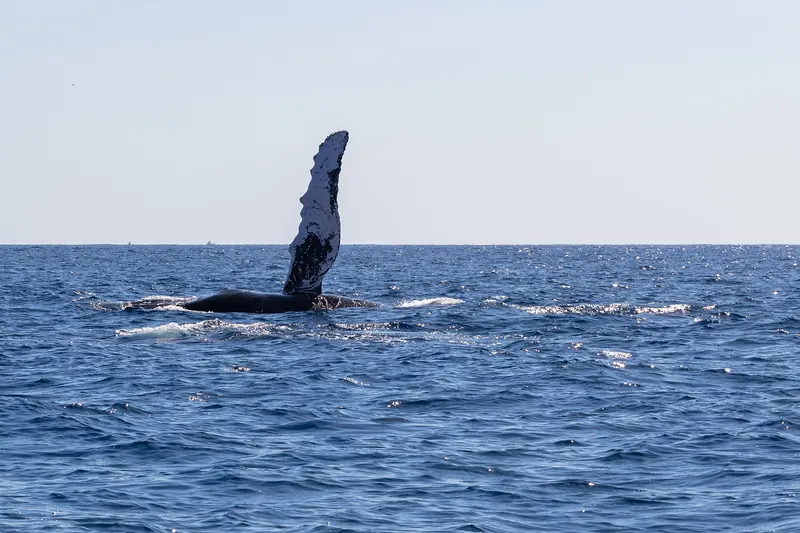
Humpback whale pectoral fin raised above the water off the Pacific coast of Cabo

Example prices for whale watching in Cabo

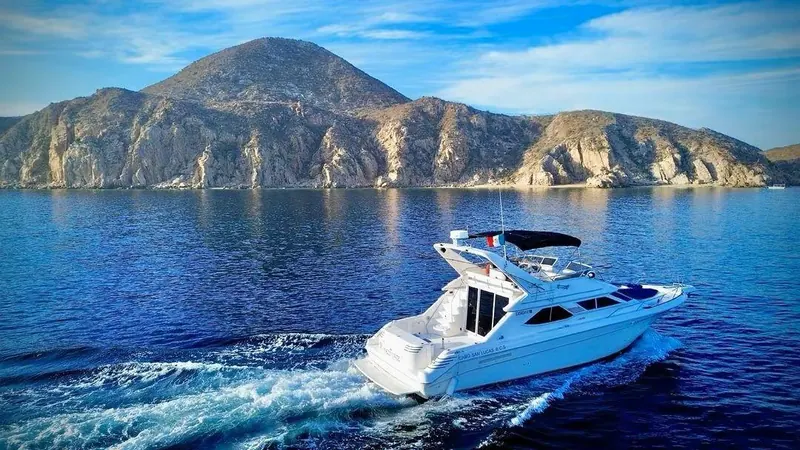
These are the yachts most people pick for whales. All of them have a flybridge or an upper deck, which is the best place to spot blows.

Yacht2 h3 h4 h
Sea Ray 40
up to 12 guests
$879
$73 per person
$1,199
$100 per person
$1,499
$125 per person
Azimut 45 Flybridge
up to 12 guests
$1,249
$104 per person
$1,649
$137 per person
$2,099
$175 per person
Sea Ray 55
up to 15 guests
min 3 h$2,129
$142 per person
$2,709
$181 per person

Prices per boat with 16% tax included; the 15% crew tip is not included. The per-person figure is the boat price divided by its full capacity, rounded.

The McKinna 70 is the all-inclusive choice, from USD 4,499 for three hours with a chef, a crew of five and complimentary drinks served by the crew. It and the Azimut 70, all-inclusive with complimentary drinks and a crew of three from USD 4,199, are the only yachts that serve alcohol; on the others you bring your own drinks and the crew keeps them on ice.

How to choose a yacht for whale watching

Height matters more than length. The Sea Ray 40 and the Azimut 45 have a flybridge that puts you well above the water, and twelve people fit on either one. The Sea Ray 55 carries fifteen and has an air-conditioned salon for anyone who wants a break from the wind. Winter mornings on the Pacific side are cool, so a warm inside space is worth more than it sounds.

If you are coming off a cruise ship, the Sea Ray 65 meets you at Fisherman's Landing restaurant, by the Cabo Escape terminal, and must be back by 8 PM. For a group of two to six, the Bayliner 30 keeps the price down, but its deck sits low and you will spot fewer blows than from a flybridge.

What to expect on the water

The crew scans the horizon for blows, the puff of mist a whale leaves when it surfaces. Once a whale is found, the captain slows down, keeps the distance the rules require and lets the animal decide what happens next. Humpbacks breach, slap their tails and lift their fins, and a calf will often surface right next to its mother. Bring binoculars and a phone or camera with real zoom; the rules keep you far enough that a wide lens gives you a small gray shape.

The water runs about 72 to 74°F (22 to 23°C) in whale season, so a swim stop is for the brave. If anyone in your group gets seasick, read our notes on seasickness and the calmest times to go out and book a morning departure, when the Pacific side is usually at its flattest.
Questions

Whale watching in Cabo: what people ask.

When is whale watching season in Cabo San Lucas?

Humpback whales start showing up off Cabo in November. The official season set by SEMARNAT ran December 15 to April 30 for 2025 to 2026; the notice for 2026 to 2027 has not been published yet. January and February are the peak months.

Are whale sightings guaranteed on a private charter?

No. They are wild animals. In January and February they are seen on most mornings, but nobody can promise a sighting. A private yacht helps because the captain can stay with a whale instead of keeping a tour schedule.

How close do boats get to the whales?

Mexican rules (NOM-131) set minimum distances and speeds around whales, and captains follow them: they slow down, never chase and let the animals set the pace. For 2025 to 2026 the SEMARNAT notice also kept whale watching out of a 2 km zone around the Arch, so the watching happens on the Pacific side and at the mouth of the bay. Curious whales sometimes come closer on their own.

How long should a whale watching charter be?

Three hours is the sweet spot: time to get past Land's End, search the Pacific side and swing by the Arch on the way back. Two hours works in January and February, when whales are close. Four hours adds a snorkel stop at Pelican Rock.

How much does private whale watching in Cabo cost?

The Sea Ray 40 starts at USD 879 for two hours and USD 1,199 for three, for up to 12 guests, which is about USD 100 per person for three hours with the boat full. Prices are per boat with 16% tax included; the 15% crew tip is not included.

Best yachts for it

Best yachts for whale watching in Cabo

All thirteen

Ready?

Plan your whale season.

A written reply within 2 hours, 8 AM to 8 PM Cabo time.

Text us Text us