


Surfing in Cabo: the breaks, the seasons and where beginners should go
Summer surf on the corridor near San José, winter surf on the Pacific at Cerritos, and the town beaches that are not surf spots.
In this guide
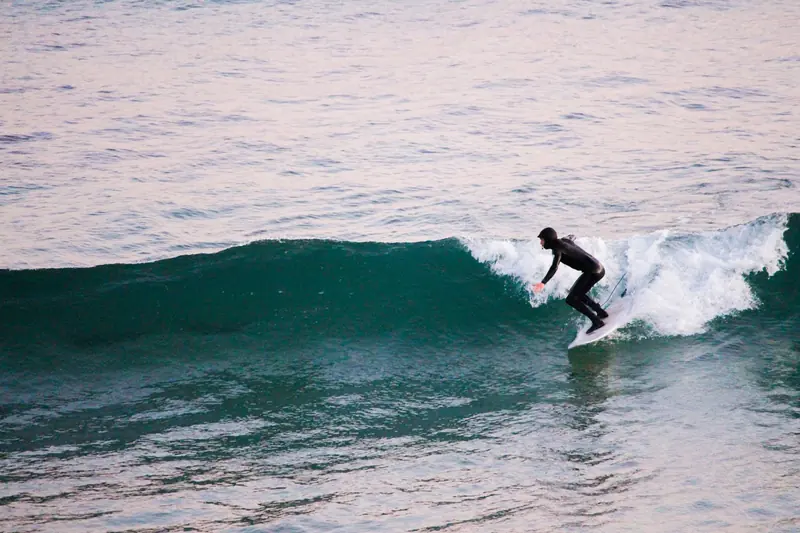
You can surf in Los Cabos all year, but not in front of Cabo San Lucas itself. In summer, roughly May to October, south swells light up the corridor and Costa Azul near San José del Cabo. In winter, roughly November to March, the waves move to the Pacific side, and Cerritos, about 40 miles north of town, is where most people go. Beginners have one good option on each coast.
The beaches next to the marina are a different story. Médano is flat, and Divorce Beach is dangerous, and neither is a surf spot.
When is surf season in Cabo?
Los Cabos has two coasts that face different directions, so it has two surf seasons.
The corridor and Costa Azul face south. They pick up long-distance swells from the South Pacific, which arrive mostly from May to October. In winter this coast is small or flat.
The Pacific side faces west and northwest. It catches winter swells from the North Pacific, mostly from November to March, and it also gets some of the summer energy.
| Months | Where it breaks | Water |
|---|---|---|
| November to March | Pacific side: Cerritos | 72 to 81°F (22 to 27°C) |
| April | Small on both coasts | About 72°F (22°C) |
| May to July | Corridor and Costa Azul | 75 to 81°F (24 to 27°C) |
| August to October | Corridor, Costa Azul, East Cape | About 85°F (29°C) |
Water temperatures come from the monthly data in our trip guide. The Pacific side usually runs a little cooler than those numbers.
One caution about late summer. Tropical storms passing offshore in August and September can send the biggest swells of the year. Those days are for experienced surfers only, and when the surf gets dangerous the authorities raise black flags and close beaches.
Where are the surf beaches in Los Cabos?
Costa Azul, near San José del Cabo
Costa Azul is the most surfed stretch in Los Cabos. It sits at the San José end of the corridor, about 20 miles from Cabo San Lucas, and it has three breaks side by side.
- Old Man's, also called Acapulquito, is the gentle one. It's a slow right-hand wave that rolls for a long way, good for longboards and for learning. Lessons and rentals are on the sand.
- The Rock is the middle break, a right off the headland that needs a solid south swell.
- Zippers is the fast one, a right-hand reef break and the best-known summer wave in Los Cabos. It hosts the Los Cabos Open of Surf. It's for intermediate and advanced surfers, it gets crowded, and the locals know it well. Give them room.
Monuments, by Cabo San Lucas
Monuments is the only real surf break close to Cabo San Lucas, about five minutes out of town on the highway toward San José. It's a left point break over rock, best on a south swell. The takeoff is fast and the bottom has boulders and sea urchins, so it's a wave for advanced surfers. Low tide makes it worse.
Cerritos, on the Pacific
Cerritos is the winter answer and the best beginner beach in the region. It's about 40 miles north of Cabo San Lucas on Highway 19, around 45 minutes by car, close to Todos Santos. The bottom is sand, the waves break in several places along the beach, and surf schools and board rentals line the sand.
Because it's on the road to Todos Santos, most people combine the two. Our Todos Santos day trip guide covers the drive and the town.
The East Cape
East of San José, the coast turns north into the Sea of Cortez. Point breaks there, such as Shipwrecks, work on summer south swells. They're more remote, with fewer services, and suit experienced surfers who have their own vehicle and know how to read a lineup without help.
| Break | Wave | Level | Season |
|---|---|---|---|
| Old Man's | Slow right | Beginner and up | Summer |
| Zippers | Fast right, reef | Intermediate and up | Summer |
| Monuments | Left point, rock | Advanced | Summer |
| Cerritos | Beach break, sand | Beginner and up | Winter |
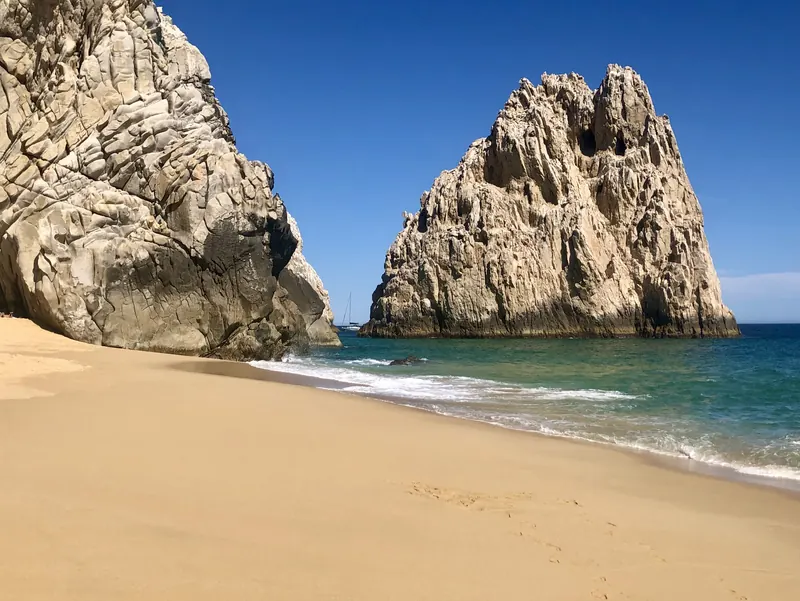
Why aren't the beaches by the marina surf spots?
People arrive in Cabo San Lucas, see the Pacific on one side of Land's End and the bay on the other, and assume there must be surf nearby. There are waves, but none you should ride.
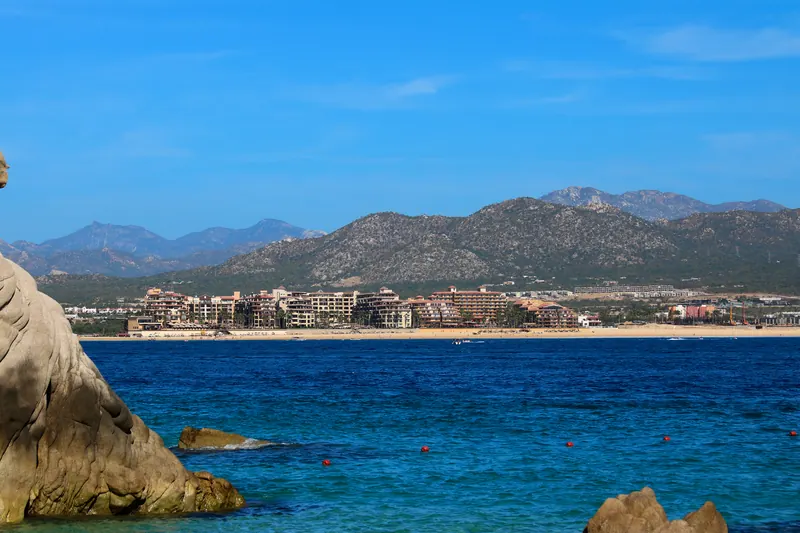
Médano Beach faces the bay, and Land's End blocks the Pacific swell. The water is calm on most days, which is why it's the town's swimming beach. A longboard would sit there going nowhere.
Divorce Beach, on the Pacific side of Land's End, has the opposite problem. The waves are big, but they break hard onto steep sand, with a strong undertow and a quick drop-off. There are no lifeguards, and the only way in is by boat or on foot from Lover's Beach. It's a beach for photos. The long Pacific beach that runs west of it toward Cabo Falso is the same kind of water.
If you want to know which beaches are fine for getting in the water without a board, our guide to Cabo beaches that are safe to swim lists them.
Where should beginners take a surf lesson?
Pick the coast by the month:
- May to October: Old Man's at Costa Azul. The wave is soft and long, and you're 30 minutes from Cabo San Lucas.
- November to March: Cerritos. Sand bottom, plenty of whitewater to practice on, and a longer drive.
- April is often small on both coasts, which can be an advantage for a first lesson.
A first lesson starts on the sand, practicing how to get to your feet, before you paddle out. Expect to ride whitewater on a big foam board. Some people stand up in the first session, and most need three to five lessons before it feels controlled.
We don't recommend specific schools. Look for small groups, an instructor in the water with you, and foam boards with leashes in good condition. Ask where the rocks are before you paddle out.
Is surfing in Cabo safe?
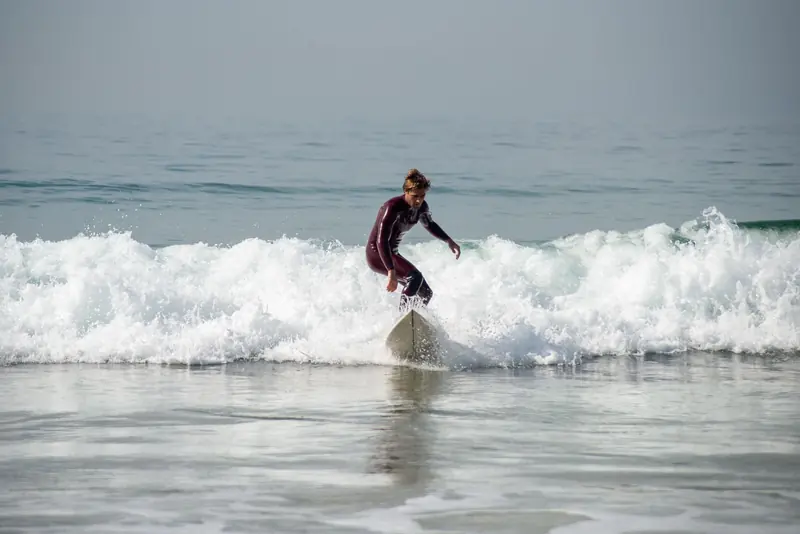
The risks are ordinary surf risks, plus a few that are specific to this coast.
- Rocks and urchins. Several corridor breaks are over reef or boulders. Reef booties help, and so does knowing the tide.
- Currents. Rip currents are common on the Pacific side. If you're caught in one, paddle parallel to the beach until you're out of it.
- Flags. Lifeguarded beaches in Los Cabos use colored flags. Red means stay out and black means the beach is closed.
- Sun. A two hour session at this latitude burns fast. Wear a rash guard and waterproof sunscreen.
- Crowds. At Zippers, wait your turn and don't drop in on anyone.
- Don't surf alone at remote breaks, and never paddle out on a big storm swell because it looks fun from the road.
How to pair a surf trip with a private boat day
Our yachts are pleasure and snorkel boats. They don't carry surfboards, and we don't run boat trips to surf breaks. The useful pairing is surf on one day, or one half of the day, and the boat on the other.
Three ways people do it:
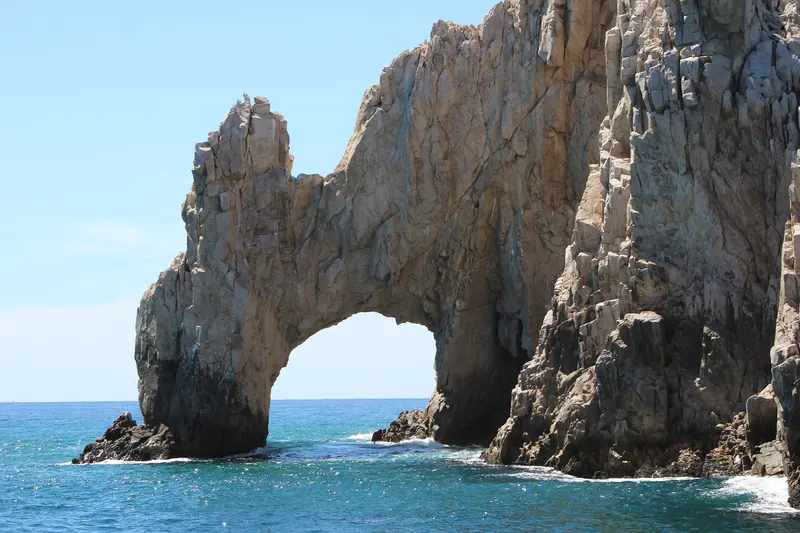
- A rest day on the water. After two or three days of paddling, shoulders need a break. A 4 hour snorkel charter to Santa María Bay is an easy day: the Arch first, then up the coast to snorkel, with a swim stop on the way back.
- Surf at dawn, sunset on the boat. Summer surf is best early, before the wind comes up. That leaves the evening free for a 2 hour Pacific sunset route, around Land's End and out toward the Cabo Falso lighthouse.
- A day for the people who don't surf. If half the group came for waves and the other half didn't, the boat is the day everyone does together.
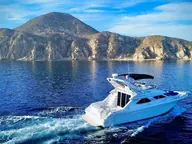
The Pacific sunset route is also the best look you'll get at the surf you were told not to ride. From the deck you can watch the swell hit Divorce Beach and the long empty beach beyond it from a safe distance.
| Yacht | Guests | 2 hours | 4 hours |
|---|---|---|---|
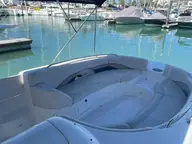
| Chaparral 28 | Up to 10 | USD 519 / MXN 9,799 | USD 909 / MXN 17,399 |
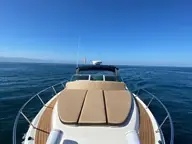
| Sea Ray 36 | Up to 12 | USD 659 / MXN 12,599 | USD 1,219 / MXN 23,299 |
| Sea Ray 40 | Up to 12 | USD 879 / MXN 16,799 | USD 1,499 / MXN 28,499 |
Prices are per boat for the whole group, with the 16% tax included. The customary crew tip is 15% and isn't included. All three include snorkel gear, and the Chaparral 28 adds a lily pad floating mat and a Bluetooth sound system.
A group of eight on the Chaparral 28 for 4 hours comes to about USD 114 each. Bring your own drinks if you want them (guests must be 18 or over to drink), since we don't sell or serve alcohol on board.
Planning the boat day
Check the surf forecast first, then put the boat on the day with the smallest waves. Mornings have the calmest water for snorkeling, and the wind usually builds after midday. For water temperatures in your month, see our water temperature guide.
Charters leave from Marina Cabo San Lucas between 7 AM and 7 PM. Send your date and group size through the planner, and we reply in writing within 2 hours, 8 AM to 8 PM Cabo time.
Yachts in this guide
Questions people ask
Can you surf in Cabo San Lucas?
Not in front of town. The bay at Médano Beach is sheltered by Land's End and stays flat. The surf is along the corridor near San José del Cabo in summer and on the Pacific at Cerritos, about 40 miles north, in winter.
When is the best time to surf in Los Cabos?
It depends on the coast. South swells reach the corridor and Costa Azul from about May to October, and northwest swells reach the Pacific side from about November to March.
Where can beginners surf in Cabo?
Two places: Old Man's at Costa Azul near San José del Cabo, a slow right-hand wave that suits longboards, and Cerritos on the Pacific, which has a sandy bottom. Both have lessons and board rentals on the beach.
Can you surf at Divorce Beach?
No. Divorce Beach has a heavy shore break, a strong undertow and no lifeguards. It's a beach to look at from the sand or from a boat.
Do I need a wetsuit to surf in Cabo?
In summer, no: the water reaches about 85°F (29°C) from August to October. From January to April it drops to about 72 to 74°F (22 to 23°C), and many surfers wear a thin wetsuit or a neoprene top.
Plan your day on the water
Pick a yacht, the hours and the food in the planner. A written reply within 2 hours, 8 AM to 8 PM Cabo time.
Keep reading
 Beaches and snorkelingAre Cabo Beaches Safe to Swim? Bay vs Pacific SideThe swimmable beaches in Cabo face the Sea of Cortez. Here is which ones to choose, which to avoid, and what the flags mean.7 min read
 Things to doTodos Santos Day Trip From Cabo: Is It Worth It?Todos Santos is 48 miles and about an hour from Cabo on Highway 19: what to see, where not to swim, how to plan.7 min read
 Plan your tripCabo Water Temperature by Month: What to ExpectSea temperature off Cabo for every month, how the Pacific side differs, when to pack a rash guard and the best months to snorkel.8 min read
 EventsCabo Events in November 2026: Dates and CalendarWhat's on in Los Cabos in November 2026: altars, a PGA TOUR event, the Baja 1000, surfing at Cerritos and the first whales.8 min read