


Are Cabo beaches safe to swim? Which ones are, which ones aren't, and how to read the flags
The swimmable beaches in Cabo face the Sea of Cortez. Here is which ones to choose, which to avoid, and what the flags mean.
In this guide
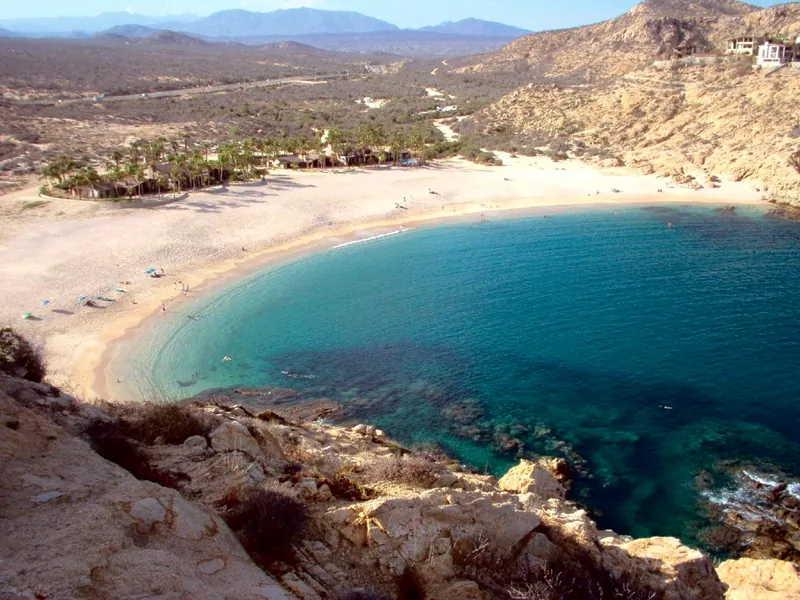
Some Cabo beaches are safe to swim and some are not, and the dividing line is which water they face. Beaches on the Sea of Cortez side, like Médano Beach, Santa María Bay and Chileno Bay, are usually calm. Beaches facing the open Pacific, like Divorce Beach and Playa Solmar, have heavy surf and strong currents, and you should stay out of the water there.
Can you swim in Cabo San Lucas?
Yes, in the right places. Cabo San Lucas sits at the tip of the Baja peninsula, where two bodies of water meet. Land's End, the granite point with the Arch on it, separates them.
On the east side is the Sea of Cortez, also called the Gulf of California. The bay of Cabo San Lucas and the coves along the tourist corridor toward San José del Cabo face this way, and the water there is usually calm.
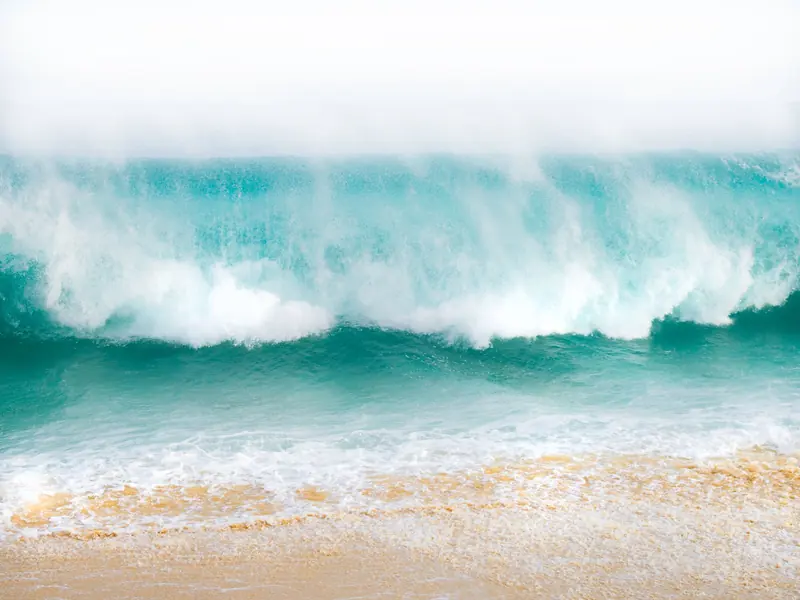
On the west side is the Pacific. Nothing stops the swell between the open ocean and those beaches, so the waves break hard on the sand and rip currents pull back out. Pacific-side beaches are for walking and photos.
Which Cabo beaches are swimmable?
| Beach | Faces | Swimming | Getting there |
|---|---|---|---|
| Médano Beach | Bay (Sea of Cortez) | Yes | Walk from the marina |
| Lover's Beach | Bay (Sea of Cortez) | Yes, no lifeguards | Boat |
| Santa María Bay | Sea of Cortez | Yes | Car or boat |
| Chileno Bay | Sea of Cortez | Yes | Car or boat |
| Divorce Beach | Pacific | No | Boat, or walk across from Lover's Beach |
| Playa Solmar | Pacific | No | From the Pacific-side hotels |
Médano Beach
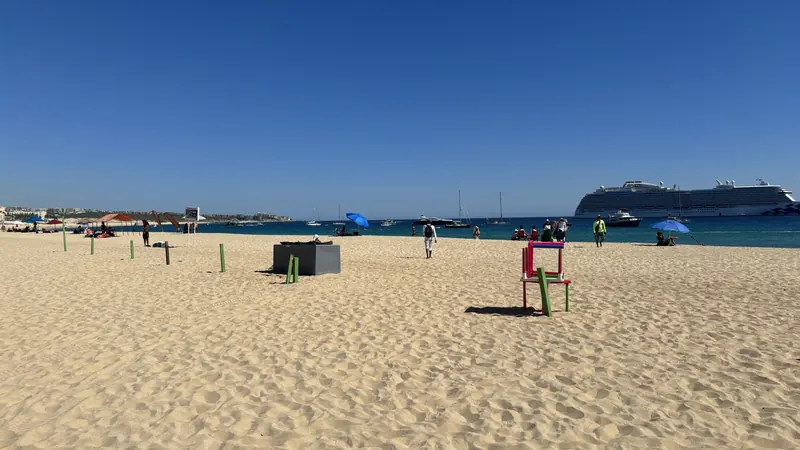
Médano Beach is the swimming beach in town, on the bay next to Marina Cabo San Lucas. Land's End shelters it from the Pacific, and it holds Blue Flag certification, a program that requires lifeguards and clearly marked swimming areas. The main thing to watch is boat traffic, so swim inside the marked zones. Our Médano Beach guide has the details.
Lover's Beach
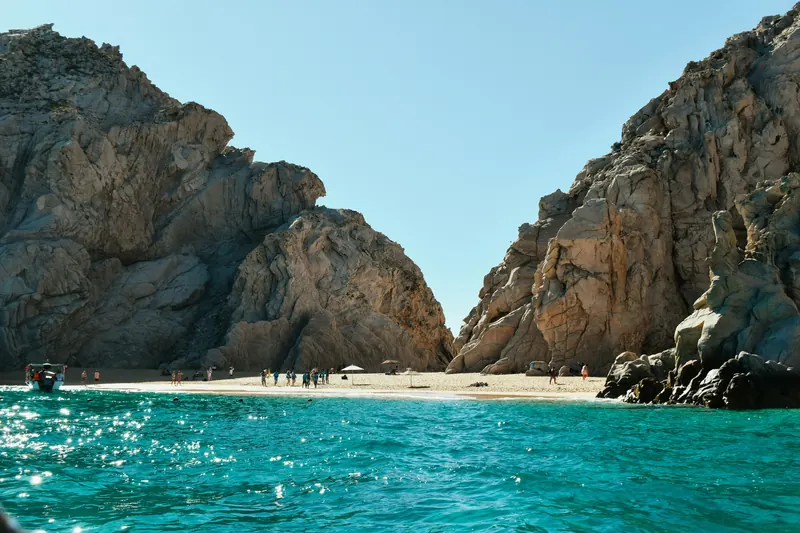
Lover's Beach is on the bay side of Land's End, about 1 mile (1.7 km) from the marina, and you reach it by boat. The water on the bay side is usually calm and clear. There are no lifeguards, restrooms or shade on the sand, so bring what you need or swim in from a yacht. See our Lover's Beach guide.
Santa María Bay
Santa María Bay is a sheltered horseshoe cove up the coast, 6.7 miles (11 km) from the marina by boat, with reef along both points and clear water. It is one of the favorite snorkel stops in Los Cabos and holds Blue Flag certification. By road it has public access from the corridor.
Chileno Bay
Chileno Bay is the next cove over, 7.9 miles (13 km) from the marina, with a sandy bottom and reef on both sides. It is a Blue Flag beach with a lifeguard station, showers and parking. On longer charters it is paired with Santa María.
Here are the places from this guide on a map.
Tap a number to find it on the map.
- Médano BeachThe swimming beach in town, a walk from the marinaDirections
- Lover's BeachSwim on the bay side, reached by boatDirections
- Santa María BaySheltered cove with reef, 6.7 miles from the marinaDirections
- Chileno BaySandy bottom with reef on both sidesDirections
- Divorce BeachPacific side, look but do not swimDirections
Which Cabo beaches are not safe to swim?
The short answer: anything facing the open Pacific.
Divorce Beach is the best-known example. It shares a strip of sand with Lover's Beach, but its end faces the Pacific, with big surf, a strong undertow and a steep drop-off. People have drowned there, and in July 2026 authorities flew a black flag at the beach. Look at it from the boat or from the dry sand.
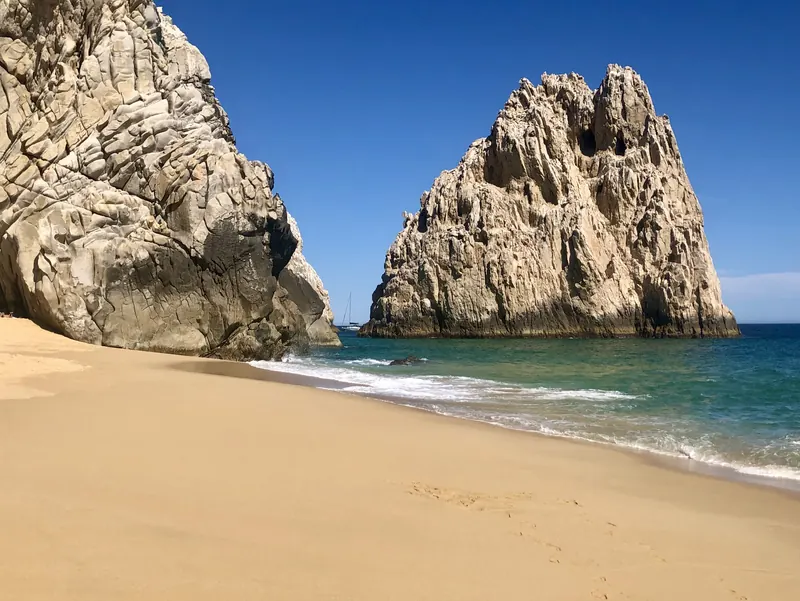
Playa Solmar, the long Pacific beach in front of the hotels on the far side of the hill from downtown, is similar: white sand, powerful waves and currents that make swimming dangerous.
The same goes for the sand that sometimes builds up under the Arch every few years. It sits where the two seas meet, and authorities have closed it to landings each time it appeared because of the currents.
What do the beach flag colors mean in Los Cabos?
Lifeguarded beaches in Los Cabos use colored flags to show the day's conditions. Check the flag every time you go in, because it can change from morning to afternoon.
| Flag | Meaning | What to do |
|---|---|---|
| Green | Calm conditions | Swimming allowed |
| Yellow | Moderate surf or current | Stay close to shore, confident swimmers only |
| Red | High hazard | Stay out of the water |
| Black | Beach closed | Do not go in |
Some beaches also fly a separate flag for jellyfish and other marine life. If you see one you don't recognize, ask the lifeguard.
A red flag is a strong warning, not a formal ban, but treat it as a no. A black flag is a closure.
How to swim safely in Cabo
A few habits keep a beach day in Cabo safe:
- Swim at a beach with lifeguards when you can, and check the flag when you arrive and again later in the day.
- On the Pacific side, stay on the dry sand. Waves reach farther up the beach than they seem to, and people have been pulled in while standing at the water's edge.
- Keep away from boat lanes. On the bay, water taxis and yachts run close to shore, so stay inside the marked swim areas at Médano.
- Don't swim alone, and keep kids within arm's reach, even in calm water.
- Skip the swim after drinks in the sun.
If a current pulls you away from shore, don't fight it head-on. Swim parallel to the beach until you're out of the pull, then angle back toward shore. If you can't, float, tread water and wave for help.
| Situation | What to do |
|---|---|
| Red or black flag | Stay out of the water |
| No flag, Pacific-facing beach | Stay out of the water |
| Caught in a current | Swim parallel to shore, then angle in |
| Jellyfish flag or warning | Ask the lifeguard before going in |
Is Cabo safe for tourists?
For the water, the answer depends on the beach, as above. For travel in general, the U.S. State Department listed Baja California Sur, the state where Cabo San Lucas is, at Level 2 (Exercise Increased Caution) as of mid-2026. Advisories change, so read the current one at travel.state.gov before your trip. Canadian travelers can check the Government of Canada's travel advice page for Mexico.
On the water, our charters are run by independent licensed operators, and the harbor is controlled by the Port Captain (Capitanía de Puerto, part of the Mexican Navy). The Port Captain closes the harbor when there is a hurricane or storm threat or another extraordinary situation. Most closures fall between September and mid-October. If your date is closed, you get a new date or a full refund.
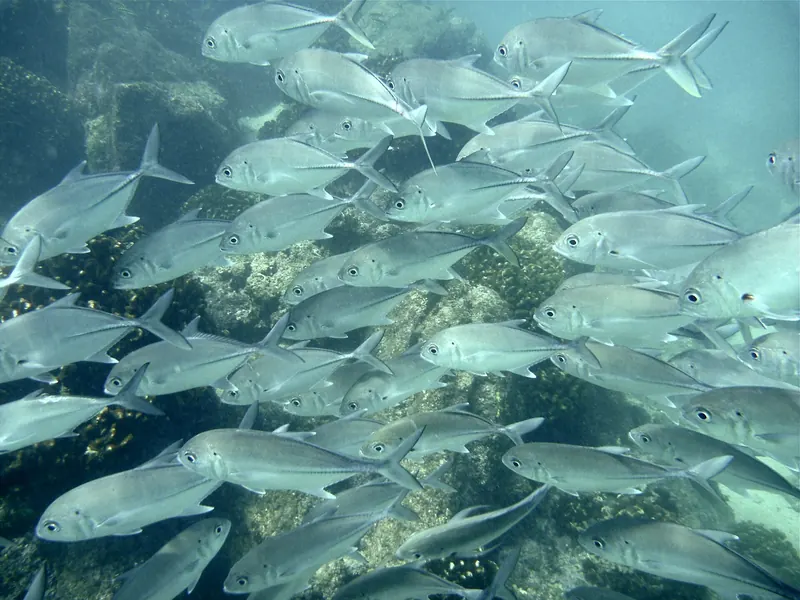
Swimming from a private boat
A private yacht gets you to the calm water without the crowd on the sand. The captain picks the stop based on that day's conditions, and you get in the water once the boat is anchored.
The 4-hour Santa María snorkel route visits the Arch first, then goes up the coast to snorkel Santa María Bay, with a swim stop on the way back. It is 15.5 miles round trip. The 5 to 8-hour route adds Chileno Bay, with time to snorkel each cove and lunch at anchor. Our Santa María vs Chileno comparison helps you choose.
Prices are per boat, not per person, with 16% IVA tax included. The customary 15% crew tip is not included.
| Yacht | Guests | 4 hours | 6 hours |
|---|---|---|---|
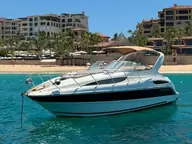
| Bayliner 33 | up to 8 | USD 1,139 / MXN 21,699 | USD 1,659 / MXN 31,599 |
| Sea Ray 36 | up to 12 | USD 1,219 / MXN 23,299 | USD 1,649 / MXN 31,299 |
| Sea Ray 40 | up to 12 | USD 1,499 / MXN 28,499 | USD 1,979 / MXN 37,699 |
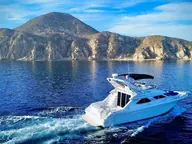
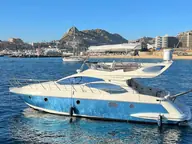
| Azimut 45 Flybridge | up to 12 | USD 2,099 / MXN 39,899 | USD 2,979 / MXN 56,699 |
All four include snorkel gear and board at Marina Cabo San Lucas. If you have kids along, tell us their ages when you book so the crew brings the right life jacket sizes.
Planning a swim day in Cabo
For a beach day on your own, go to Médano in town or drive to Santa María or Chileno, and check the flag when you arrive. For a day on the water, book 4 hours or more and let the captain take you to the coves.
Pick your yacht and date in the planner. We reply within 2 hours, 8 AM to 8 PM Cabo time, and payment goes through a secure Stripe link once your date is confirmed in writing.
Yachts in this guide
Questions people ask
Are Cabo beaches safe to swim?
Some are. Beaches on the Sea of Cortez side, such as Médano Beach, Santa María Bay and Chileno Bay, are usually calm and swimmable. Beaches facing the open Pacific, such as Divorce Beach and Playa Solmar, have heavy surf and strong currents and are not safe for swimming.
What is the safest beach to swim in Cabo San Lucas?
Médano Beach, on the bay next to the marina, is the main swimming beach in town and holds Blue Flag certification. Along the corridor, Santa María and Chileno are sheltered coves that are also Blue Flag certified and popular for snorkeling.
What do the beach flag colors mean in Los Cabos?
Green means calm conditions and swimming allowed, yellow means moderate surf or current, red means high hazard and you should stay out, and black means the beach is closed. Some beaches also fly a separate flag for jellyfish and other marine life.
Is Cabo safe for tourists?
As of mid-2026, the U.S. State Department lists Baja California Sur, the state that includes Cabo San Lucas, at Level 2, Exercise Increased Caution. Check the current advisory at travel.state.gov before you travel.
Can you swim off a boat in Cabo?
Yes. Private charters stop in calm water on the bay side and in the coves along the corridor, such as Santa María Bay, 6.7 miles (11 km) from the marina. Every one of our yachts includes snorkel gear, and the crew picks a stop that suits the day's conditions.
Plan your day on the water
Pick a yacht, the hours and the food in the planner. A written reply within 2 hours, 8 AM to 8 PM Cabo time.
Keep reading
 Beaches and snorkelingMedano Beach Cabo: Swimming, Beach Clubs, Getting ThereCabo's calm swimming beach on the bay: when to swim, how to walk there from the marina or cruise tender, and the beach-club strip.6 min readBeaches and snorkelingChileno Bay vs Santa Maria Bay: Which to Snorkel in CaboSanta María or Chileno? How the two corridor coves compare for snorkeling, getting there by car or boat, and doing both in one day.7 min read
 Beaches and snorkelingLover's Beach Cabo: How to Get There and Where to SwimHow to reach Lover's Beach by boat, which side you can swim, why there is no easy walk in, and what to pack.7 min read
 Plan your tripDiamante Cabo Resorts: Nobu, Hard Rock and the MarinaNobu and Hard Rock in Diamante, the farthest resorts up the Pacific coast: the marina distance, the beach, and a boat day plan.7 min read