


Scuba diving in Cabo San Lucas: the dive sites, the seasons and what beginners need
Where to dive in Los Cabos, from Pelican Rock and the sand falls to Gordo Banks and Cabo Pulmo, with water temperatures and beginner options.
In this guide
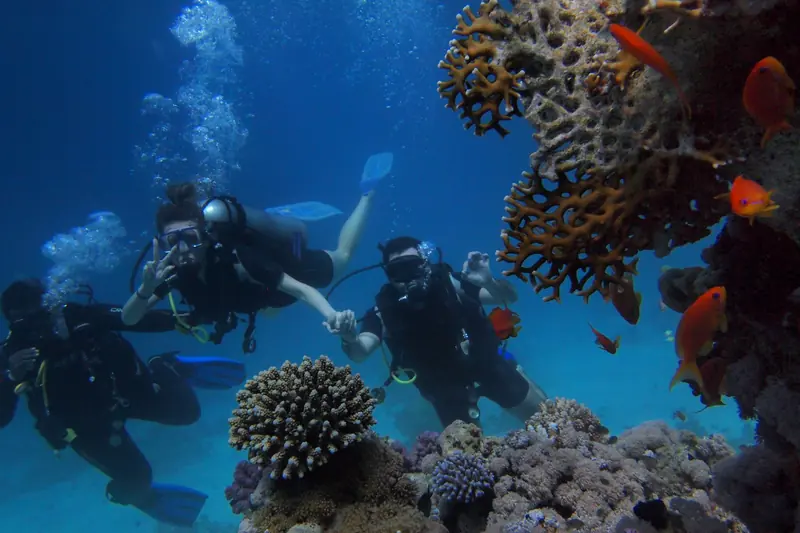
Cabo San Lucas has good scuba diving, and the closest sites are about five minutes by boat from the marina. Around Land's End you can dive a reef that starts at 15 ft (5 m), a canyon wall with underwater sand falls, and the rocks where the sea lions live. Farther away, Gordo Banks is a deep seamount dive for advanced divers, and Cabo Pulmo is a protected reef about two hours away by car.
One thing to know up front: our yachts are snorkel and pleasure boats. They don't carry tanks, and we don't run dives. This guide explains the diving so you can plan it, and then how a boat day fits around it.
Where are the best dive sites in Cabo San Lucas?
Los Cabos has four diving areas, and they differ a lot in distance and difficulty.
| Area | Getting there | Level |
|---|---|---|
| Land's End, in the bay | About 5 minutes by boat | Beginner to advanced |
| The corridor | Boat ride up the coast | Beginner to intermediate |
| Gordo Banks | Offshore from San José | Advanced only |
| Cabo Pulmo | About 2 hours by car | Beginner to advanced |
Land's End and the bay
The sites inside Cabo San Lucas bay sit along the rocks of Land's End, in the Cabo San Lucas Flora and Fauna Protection Area. They're close enough that a two-tank morning is back at the dock by lunch.
Pelican Rock is the usual first dive. The reef starts at about 15 ft (5 m) and slopes down to the edge of a canyon, with schools of tropical fish, moray eels, pufferfish and the occasional ray. Dive operators rate it a beginner site. It's also the first snorkel stop on most boat routes, 0.8 miles (1.3 km) from the marina.
The sand falls are what Cabo is known for among divers. The seabed here drops into a steep submarine canyon, and sand pours over the ledges like a slow waterfall. Scientists first recorded the falls in 1959, and Jacques Cousteau later filmed them and made them famous. They start at roughly 90 to 100 ft (about 30 m), so you need an advanced certification to see them properly.
Neptune's Finger is a rock pinnacle with a vertical wall next to it, dived from about 30 to 110 ft (9 to 34 m). It's an intermediate to advanced site, with turtles, groupers and sometimes schools of mobula rays. The North Wall, nearby, is a shallower and easier dive.
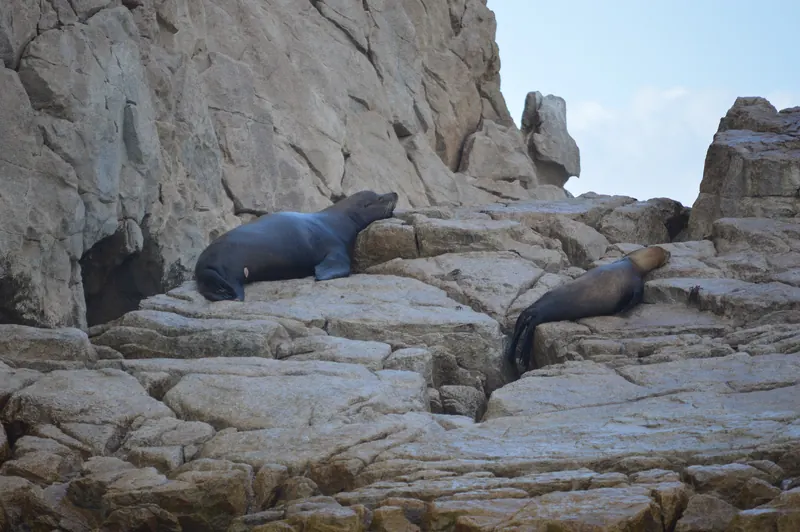
Land's End itself, by the Arch, is where the Sea of Cortez meets the Pacific. Divers go for the sea lion colony: the animals often come down to look at divers. Depths run from about 30 to 80 ft (9 to 24 m), and there can be current and surge, so it's rated intermediate to advanced.
The corridor
Along the coast toward San José there are reef dives in the 40 to 60 ft (12 to 18 m) range. Chileno Bay is the best known, a calm protected reef with sea fans, turtles and rays, suitable for beginners and intermediate divers. From the surface it's also one of the two best snorkel coves in Los Cabos.
Gordo Banks
Gordo Banks is a pair of seamounts about 7 miles offshore from San José del Cabo. The top of the inner bank is around 100 ft (30 m) down, in open blue water with current. Divers go for large animals: schooling hammerhead sharks at certain times of year, plus silky sharks, tuna and marlin.
It's a dive for advanced, experienced divers only. Sightings aren't guaranteed, and conditions decide whether boats go at all.
Cabo Pulmo dive sites
Cabo Pulmo National Park is on the East Cape, about two hours by car from Cabo San Lucas. It has been a national park since 1995 and part of a UNESCO World Heritage Site since 2005. Since the reef was protected, it has become one of the best-known dive destinations in Mexico.
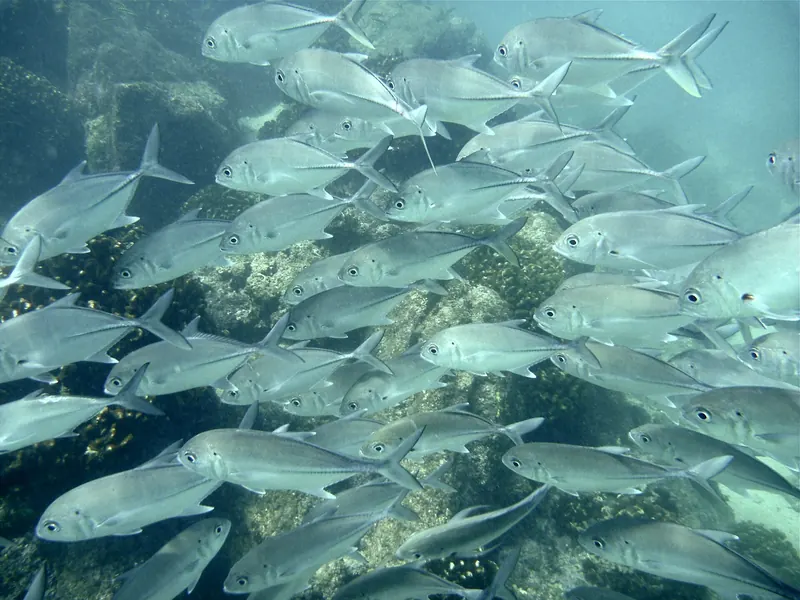
The named sites people ask about are El Bajo and Los Morros, both known for huge schools of bigeye jacks that circle in a column. Bull sharks are seen in the park too. Some sites have current, and it's a long day from Cabo San Lucas, so book it ahead. Our Cabo Pulmo guide covers the drive, the rules and what a day there involves.
When is the best time to dive in Cabo?
You can dive all year. What changes is the temperature, the visibility and the animals.
| Months | Surface water | What to expect |
|---|---|---|
| January to April | 72 to 74°F (22 to 23°C) | Coolest water, whales nearby |
| May to July | 75 to 81°F (24 to 27°C) | Warming, visibility varies |
| August to October | About 85°F (29°C) | Warmest water, clear |
| November, December | 78 to 81°F (26 to 27°C) | Warm, usually clear |
Those are surface temperatures from our trip guide. It's colder at depth, sometimes noticeably, so many divers wear a wetsuit all year and a thicker one in winter. There's a month-by-month table in our water temperature guide.
Visibility is usually best from late summer through December, often 60 to 90 ft (18 to 27 m). Late spring and early summer can have days with much less. In winter the water is cooler, and humpback whales are in the area. Whales start arriving in November, and the official watching season in 2025 to 2026 ran from December 15 to April 30.
Harbor closures are rare. The Port Captain closes the port only under storm threat or extraordinary situations, and most closures fall between September and mid-October.
Can beginners scuba dive in Cabo, and how does certification work?
Yes. There are two routes, and neither requires experience.
The first is an introductory dive, which PADI calls Discover Scuba Diving. You get a short briefing, practice a few skills in shallow water, and then dive with an instructor right next to you, to a maximum of 40 ft (12 m). It doesn't give you a certification. A shallow, sheltered site like Pelican Rock is the kind of place used for it.
The second is the full Open Water Diver course, the standard entry-level certification. It combines theory, pool or confined-water sessions and four open-water dives, and it usually takes three to four days. Once certified, you can dive to 60 ft (18 m) with a buddy. The minimum age is 10, and divers aged 10 to 14 get a junior certification with extra limits.
Three tips for a trip that includes a course:
- Do the theory online before you fly. That turns three or four days in Cabo into two or three.
- If you start the course at home, you can do only the open-water dives here. It's called a referral.
- Fill in the medical questionnaire honestly. Some conditions need a doctor's signature before you can dive, and it's easier to get that at home.
We don't recommend specific dive shops. Check that the instructor is certified by a recognized agency, that groups are small, and that the gear looks cared for.
Don't dive the day before you fly
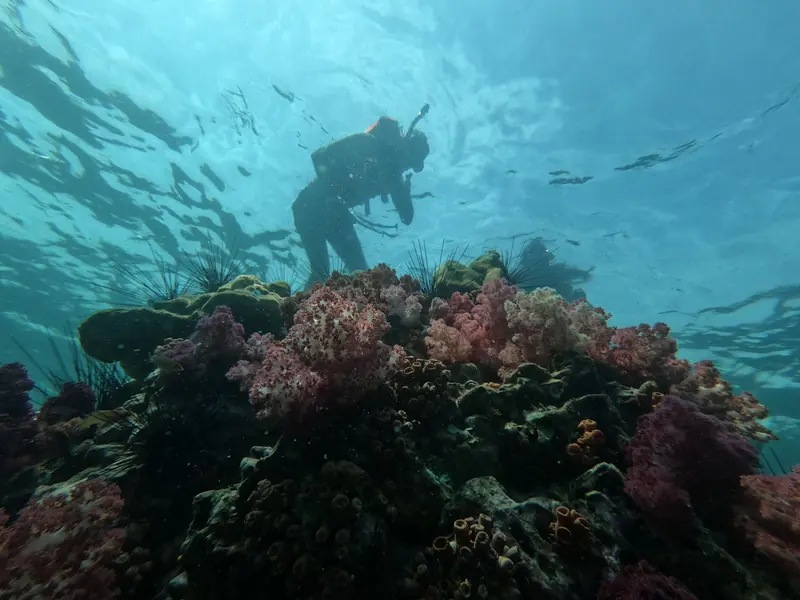
Divers Alert Network advises waiting at least 12 hours after a single no-decompression dive before flying, and at least 18 hours after several dives or several days of diving. In practice, most divers leave the last full day of the trip dry.
This is where a boat day fits. Snorkeling at the surface doesn't have a no-fly wait, so the day before your flight is a good day for a private charter.
How to pair diving with a private boat day
Divers usually travel with people who don't dive. A private boat is the day everyone does together, and it visits the same places from above.
A 2 hour Arch and Land's End route passes Pelican Rock, the sea lions, the Arch, Lover's Beach and Divorce Beach. A 4 hour snorkel charter goes to the Arch first, then up the coast to Santa María Bay, 6.7 miles (11 km) from the marina, with a swim stop on the way back. Charters of 5 to 8 hours add Chileno Bay.
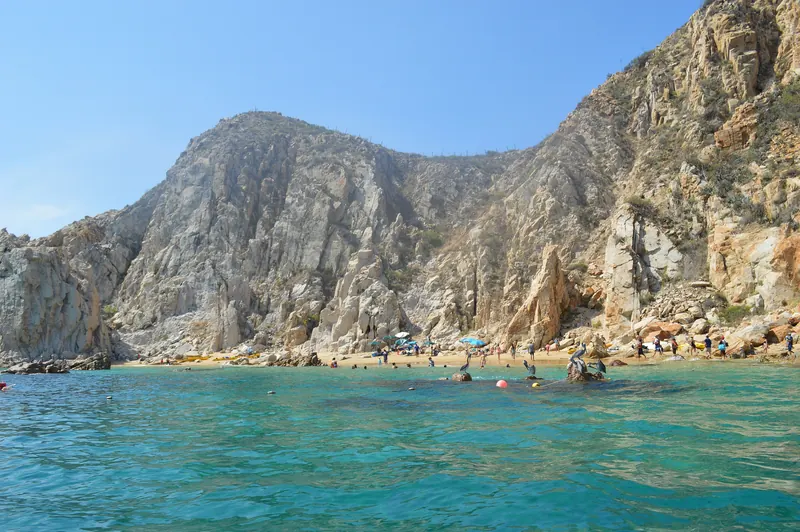
A plan that works for a five-day trip: dive on days two and three, take the boat on day four, and fly on day five. The non-divers get their water day, and the divers see from the surface the reef they were on the day before.
| Yacht | Guests | 2 hours | 4 hours |
|---|---|---|---|
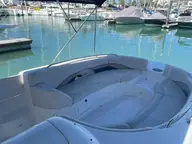
| Chaparral 28 | Up to 10 | USD 519 / MXN 9,799 | USD 909 / MXN 17,399 |
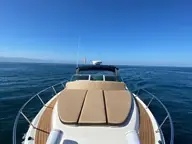
| Sea Ray 36 | Up to 12 | USD 659 / MXN 12,599 | USD 1,219 / MXN 23,299 |
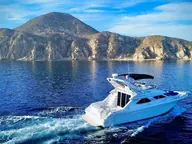
| Sea Ray 40 | Up to 12 | USD 879 / MXN 16,799 | USD 1,499 / MXN 28,499 |
Prices are per boat, with the 16% tax included. The customary crew tip is 15% and isn't included. All three include snorkel gear, and the two Sea Rays include towels. If you have your own mask, bring it, because you already know it fits.
The yachts carry no tanks, weights or dive guides, and the only fishing is on the McKinna 70's sport-fishing charter. If you want to compare the snorkel spots, our guide to the best snorkeling in Cabo ranks them by how easy they are.
Planning it
Book the dives with a dive operator and the boat day with us, and keep the boat for the day before you fly. Send your date and group size through the planner. We reply in writing within 2 hours, 8 AM to 8 PM Cabo time, and charters leave from Marina Cabo San Lucas between 7 AM and 7 PM.
Yachts in this guide
Questions people ask
Is Cabo San Lucas good for scuba diving?
Yes. The dive sites at Land's End are about five minutes by boat from the marina, with reef, a steep canyon wall, underwater sand falls and a sea lion colony. Gordo Banks and Cabo Pulmo add bigger dives farther away.
Can beginners scuba dive in Cabo?
Yes. Pelican Rock starts at about 15 ft (5 m) in the sheltered bay and is rated a beginner site. Non-certified divers can do an introductory dive with an instructor to a maximum of 40 ft (12 m).
What is the water temperature for diving in Cabo?
Surface water runs from about 72°F (22°C) from February to April to about 85°F (29°C) from August to October. It's cooler at depth, so many divers wear a wetsuit all year.
When is the best time to dive in Cabo San Lucas?
You can dive all year. Late summer and fall bring the warmest water and usually the best visibility, often 60 ft (18 m) or more. Winter water is cooler, with humpback whales in the area.
Can I scuba dive from a private yacht charter in Cabo?
Not from ours. Our yachts are snorkel and pleasure boats with no tanks or dive guides. Most include snorkel gear, and Pelican Rock, the first snorkel stop, is 0.8 miles from the marina.
Plan your day on the water
Pick a yacht, the hours and the food in the planner. A written reply within 2 hours, 8 AM to 8 PM Cabo time.
Keep reading
 Beaches and snorkelingBest Snorkeling in Cabo: 4 Spots Ranked by EaseWhere to snorkel in Cabo, from Pelican Rock minutes from the dock to Santa María and Chileno up the corridor, with water temperatures by month.7 min read
 Beaches and snorkelingCabo Pulmo National Park: Snorkeling, Diving, the DriveCabo Pulmo is a protected reef about 2 hours from Cabo San Lucas. The drive, the rules, the best months and a closer snorkel option.7 min read
 Beaches and snorkelingPelican Rock Cabo: Snorkeling Minutes From the MarinaCabo's closest snorkel spot, 0.8 miles from the dock: what lives there, the rules, and why a 2 or 3 hour boat is enough.7 min read